Colorado Safety Supply • Safety briefing
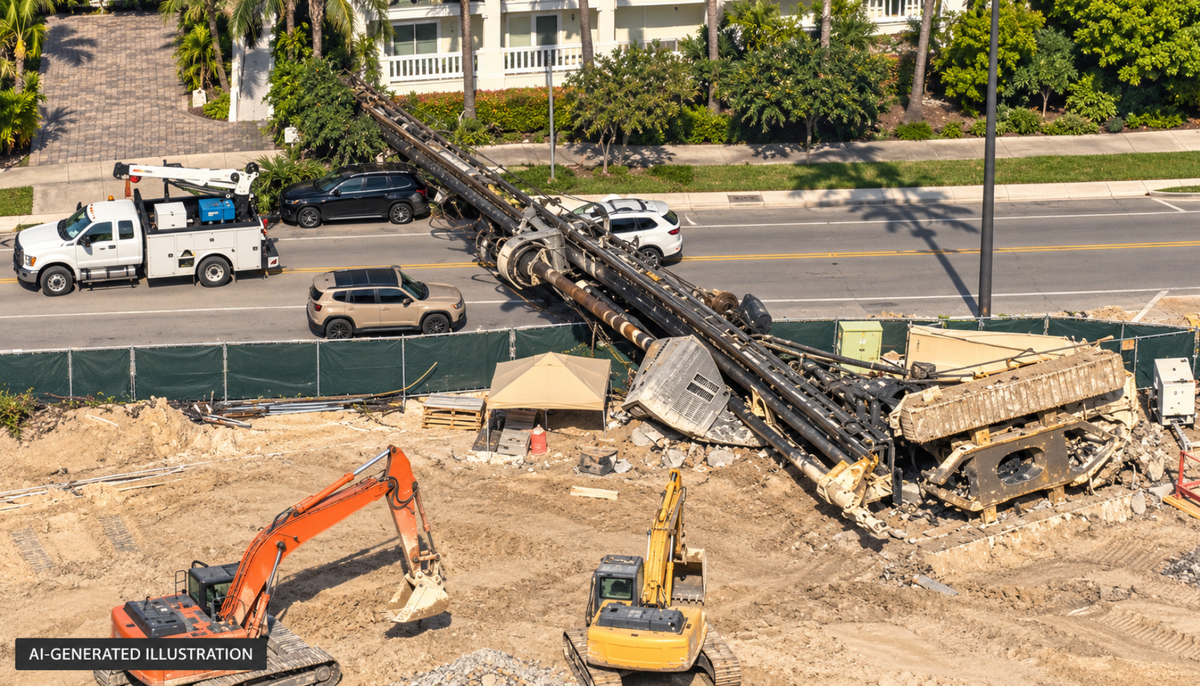
Miami Piling Rig Collapse Injures Four at Construction Site
A look at the reported facts and practical questions about site access, equipment work zones, and communication.
According to AP’s September 14, 2026 report, an 85-foot piling rig collapsed at a Miami construction site, injuring a driver and three construction workers. OSHA and local officials were investigating. The cause had not been determined in that report.
On any construction project, equipment moves, deliveries arrive, and crews shift between tasks. Clear routes and communication need to keep pace with those changes.
Start with the people moving through the site
Picture a delivery driver arriving for the first time. Can that person tell where to stop, whom to contact, and which route to use? An experienced crew may know the answers without thinking. A visitor needs clear direction.
Ask your site team to walk through three areas:
- Access routes. Where do workers, visitors, and delivery drivers travel near equipment operations? Who explains the approved route before they enter?
- Work-area boundaries. Are restricted areas easy to recognize? Who reviews the boundaries when equipment or nearby work changes?
- Communication. Does everyone involved know who directs the operation, how warnings are communicated, and how to raise a concern?
For crane operations covered by the standard, OSHA’s work-area-control requirements provide a reference for reviewing swing-radius hazards and access controls with your safety team.
Make the next toolbox talk specific
“Stay alert” leaves a lot for workers to interpret. A discussion about the actual delivery entrance or the equipment moving that morning gives the crew something concrete to work with.
- Name today’s change. Identify an equipment move, a new access route, or nearby work that needs review.
- Ask someone to explain the plan. Have a crew member describe the route or communication procedure. Follow up on anything unclear.
- Assign the follow-up. Give each unresolved issue an owner and confirm it is addressed before affected work proceeds.
The goal is a shared understanding of today’s work. If the discussion reveals a training gap, identify who needs instruction and which responsibilities that instruction must cover.