Could an accessory that looks right still be wrong for your fall protection setup? Connectors, lifelines, and harness components must suit both the system and the task—not simply appear convenient or compatible.
This guide explains how to identify accessories by function, compare connector and lifeline features, and avoid common selection mistakes. Colorado Safety Supply Company offers fall protection equipment for purchase or rental, safety training, and a harness collection for reviewing equipment options.
Key Takeaways
- Match accessories to the task and the complete fall protection system, not their appearance.
- Compare connector function, connection method, locking mechanism, and rated specifications.
- Follow equipment instructions and verify compatibility before purchase and use.
- Inspect labels and condition before putting equipment into service.
Role of Safety Harness Accessories in Fall Protection
Safety harness accessories connect equipment, support a task, or help manage parts of a fall protection setup. Their purpose depends on where they fit in the system. For background on harness components of a safety harness, follow the equipment instructions when selecting accessories.
Start with the task and system configuration. A connector, lifeline, or pulley must suit the components it joins or supports and be used as its manufacturer directs. An accessory cannot replace a suitable harness, anchorage, or complete fall protection system.
Which accessory types serve different fall protection tasks?
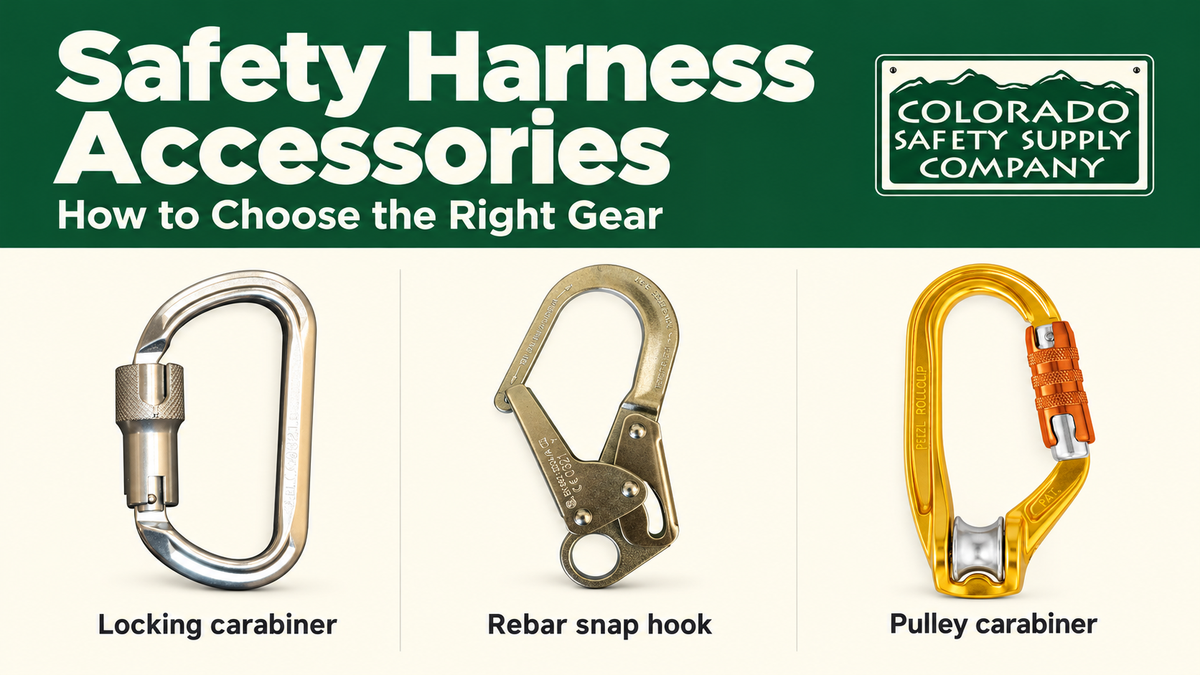
A snap hook or carabiner connects compatible components. A lifeline provides the connecting line within a configured system. A pulley may manage rope movement, while a bag stores gear and is not a fall protection component.
| Accessory type | Primary function | Selection focus |
|---|---|---|
| Snap hook or carabiner | Connects compatible components | Check the connection method, locking mechanism, and instructions. |
| Lifeline | Provides a line within a configured system | Match its design and specifications to the task. |
| Pulley | Manages rope movement | Use only as directed for the intended configuration. |
| Equipment bag | Stores or carries gear | Do not treat it as a protective component. |
How to Compare Safety Harness Accessories for Your Work
Compare accessories with the job and the system they will join in mind. Review the intended function, connection method, rated specifications, and manufacturer’s compatibility instructions. Colorado Safety Supply Company supplies fall protection equipment for purchase or rental. For regulatory context, consult OSHA fall protection requirements as well as the equipment instructions.
- Function: Identify what the accessory does and where it fits in the system.
- Connection: Check the gate and locking details against the components it must attach to.
- Specifications: Compare listed ratings and dimensions with system requirements.
- Instructions: Follow manufacturers’ directions for permitted configurations and use.
Which connector, pulley, or lifeline fits the application?
The 69N Locking Rebar Snap Hook and 354-2A Twistlock Carabiner are different connector examples, not automatic substitutes. Review each listing’s connection method and gate specification rather than inferring suitability from the product name. The Petzl RollClip A is described as a pulley carabiner; assess its pulley function and instructions for the intended configuration.
For retractable lifelines, compare the stated cable construction and available length options with the task and system instructions. A similar-looking cable or longer option is not automatically suitable.
For visual examples, browse fall protection accessories and compare product details with your system requirements.
How to Avoid Common Safety Harness Accessory Selection Mistakes
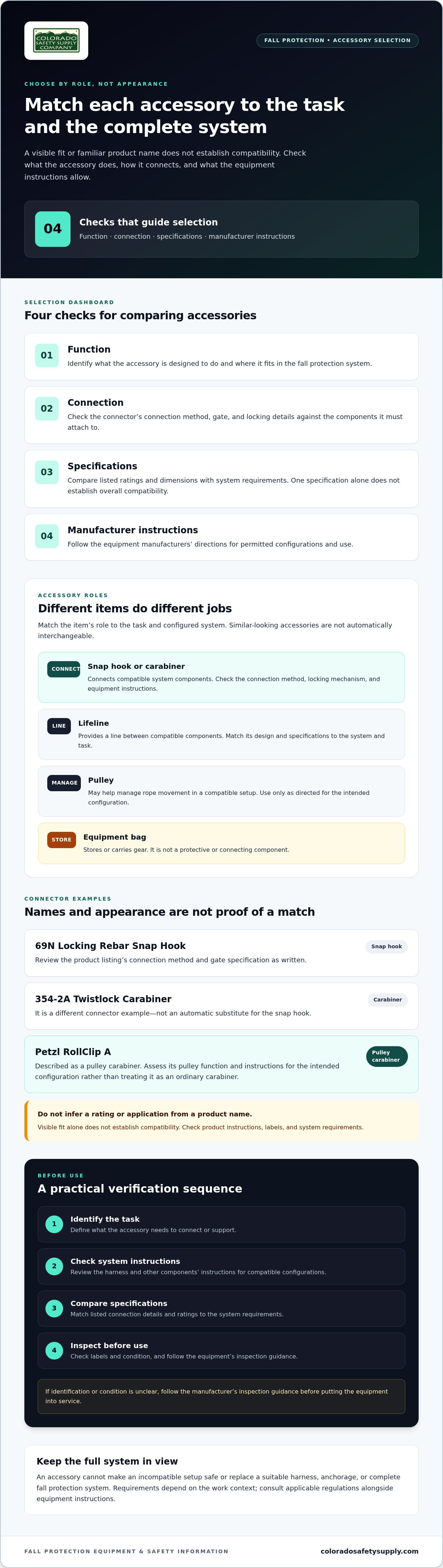
A familiar shape or product name does not prove an accessory fits. Before purchase and use, identify the task, review system instructions, compare specifications, and inspect the equipment.
- Identify the task: Define what the accessory needs to connect or support.
- Check instructions: Review the harness and other components for compatible configurations.
- Compare specifications: Match connection details and ratings to system requirements.
- Inspect before use: Check labels and condition according to inspection guidance.
What should you check before buying and using an accessory?
Confirm that connector interfaces align with the components they are intended to join. A visible fit does not establish compatibility. Read product instructions and labels, and do not infer a rating or approved use from appearance. If condition or identification is unclear, follow the manufacturer’s inspection guidance before service.
Requirements depend on the work context. For general-industry applications, consult the applicable personal fall protection system regulations alongside equipment instructions. Keep the full system in view when making the final selection.
Use the safety harness accessory examples to compare product details with your setup requirements.
Build a Fall Protection Setup You Can Verify
Select accessories for their role in the task and compatibility with the complete fall protection setup. Before use, follow equipment instructions, compare relevant specifications, and inspect each component.
Examples include locking snap hooks, twistlock carabiners, and retractable lifelines. Compare product details with system requirements rather than choosing by appearance. Colorado Safety Supply Company also offers OSHA 30-Hour Construction Training.
For equipment or training questions, contact Colorado Safety Supply Company.
Frequently Asked Questions
What accessories are used with a safety harness?
Common accessories include snap hooks, carabiners, compatible lanyards, and retractable lifelines. Pulleys may support specific rope configurations. Bags carry or store equipment but are not protective components. Every item must suit its task and the complete system.
Are safety harness accessories universal?
No. Compatibility depends on the accessory, harness, connection points, and the rest of the system. A connector that attaches physically may still be unsuitable. Compare interface details and specifications, and follow every manufacturer’s instructions.
How do I choose the right carabiner or snap hook for fall protection?
Choose based on the task, intended connection, connector geometry, locking method, and the specifications for the equipment it will join. Confirm that the gate and interface suit the application. A locking snap hook and twistlock carabiner have distinct designs, so assess each for its intended use.
How often should safety harness accessories be inspected?
Inspect accessories before each use and follow the manufacturer’s schedule or procedure for additional inspections. Check labels and look for damage, wear, deformation, or parts that do not operate as intended. Do not use defective equipment or equipment with uncertain condition until it has been handled according to applicable guidance.