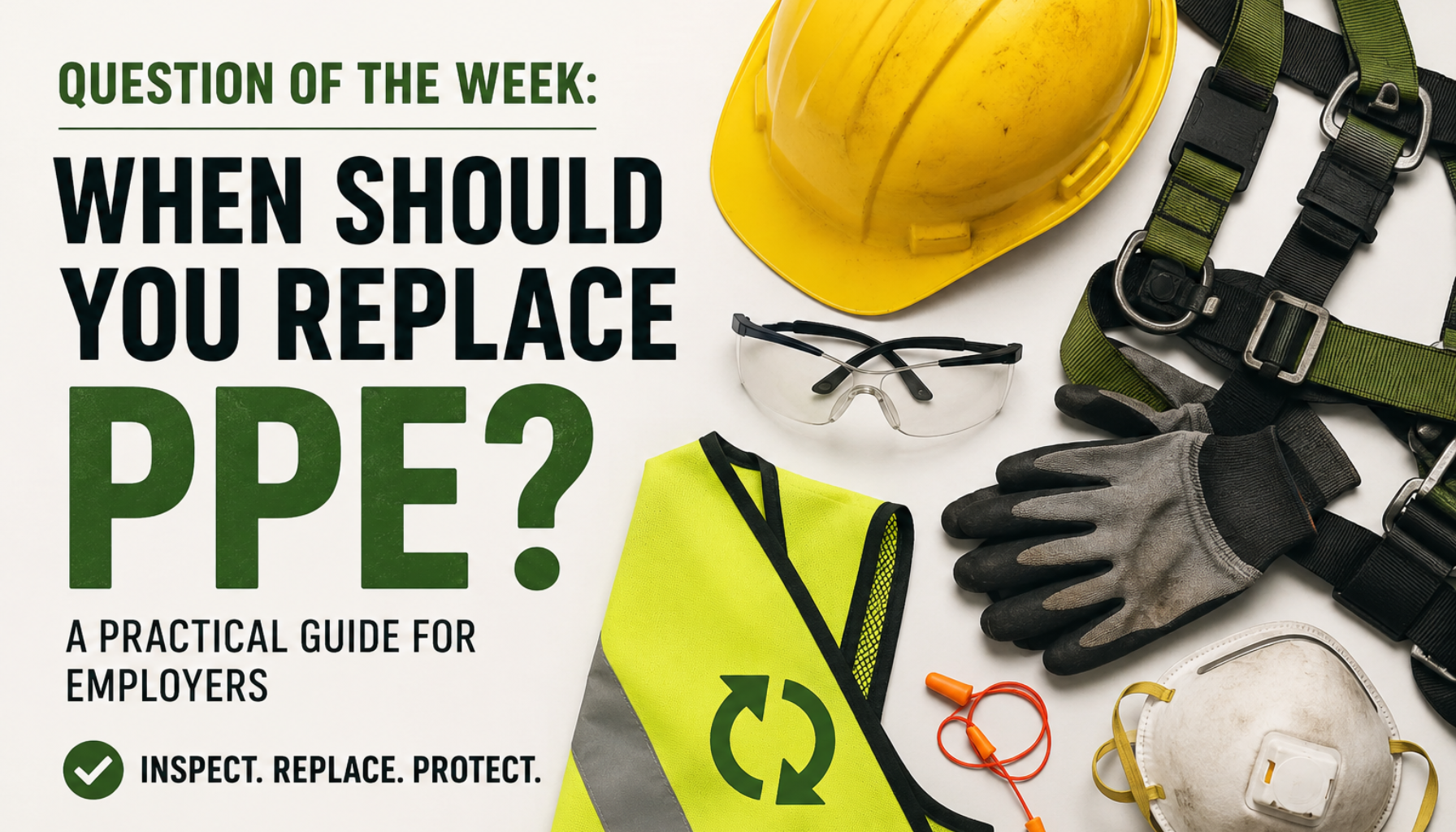
Every piece of personal protective equipment has one job: protect workers from injury. But even the best equipment will not do its job forever.
Question: How do I know when it is time to replace PPE?
The answer depends on the type of equipment, how often it is used, and whether it has been exposed to damage, chemicals, sunlight, or impact. Some PPE should be replaced immediately after an incident. Other items wear out over time.
Here is a practical guide to help employers, safety managers, and crews know when PPE should be removed from service.
Common PPE Replacement Signs
| PPE Type | Replace When You See |
|---|---|
| Hard hats and safety helmets | Cracks, dents, fading, brittle shell, damaged suspension, or impact damage |
| Full-body harnesses | Frayed webbing, broken stitching, burn marks, chemical damage, or bent hardware |
| Lanyards and SRLs | Fall arrest, damaged webbing or cable, rusted connectors, or faulty locking action |
| Safety glasses | Deep scratches, cracked lenses, broken frames, or poor visibility |
| Work gloves | Holes, worn palms, loose stitching, reduced grip, or chemical contamination |
| High-visibility apparel | Faded color, damaged reflective striping, tears, or heavy staining |
| Respirators | Cracked facepieces, damaged straps, broken valves, or poor seal |
| Hearing protection | Torn ear cushions, cracked headbands, dirty earplugs, or poor fit |
| Safety footwear | Worn soles, exposed toe caps, cracked leather, or poor ankle support |
Hard Hats and Safety Helmets
Hard hats and safety helmets are designed to absorb impact. Even if the outside looks fine, the shell and suspension system can weaken over time.
Replace your helmet if you notice:
- Cracks or dents
- Fading or brittle plastic
- Loose or damaged suspension
- Damage after an impact
- Missing components
Avoid painting, drilling, or modifying a hard hat unless the manufacturer allows it. Changes to the shell can affect how the helmet performs.
Full-Body Harnesses
A full-body harness should be inspected before every use. If damage is found, remove it from service immediately.
Look for:
- Frayed webbing
- Burn marks
- Chemical damage
- Broken stitching
- Bent or corroded hardware
- Missing labels
Important: If a harness has stopped a fall, it should not be used again unless the manufacturer specifically approves it after inspection.
Lanyards and Self-Retracting Lifelines
Lanyards and self-retracting lifelines can experience heavy force during a fall. They should be checked regularly and removed from service when damage or performance issues are found.
Replace lanyards or SRLs if they have:
- Arrested a fall
- Damaged cables or webbing
- Rusted connectors
- Locking mechanisms that do not work properly
- Missing or unreadable inspection labels
Safety Glasses
Safety glasses should provide a clear, unobstructed view. Scratched lenses may seem minor, but poor visibility can increase the risk of accidents.
Replace safety glasses when you notice:
- Deep scratches
- Cracked lenses
- Broken frames
- Loose side shields
- Reduced visibility
Work Gloves
Gloves are one of the most frequently replaced pieces of PPE because they handle daily wear, abrasion, cuts, and chemicals.
Replace gloves when they develop:
- Holes or tears
- Thin or worn palms
- Loose stitching
- Reduced grip
- Chemical contamination that cannot be safely removed
High-Visibility Apparel
High-visibility clothing depends on bright fabric and reflective striping. If workers are difficult to see from a distance, the garment is no longer doing its job.
Replace high-vis apparel if:
- The color has noticeably faded
- Reflective strips are peeling or cracked
- The fabric is torn
- Stains reduce visibility
Respirators
Respirators need regular inspection, cleaning, and maintenance. A damaged respirator may not provide proper protection.
Replace respirators if you notice:
- Cracked facepieces
- Damaged straps
- Broken valves
- Poor facial seal
Filters and cartridges also have limited service lives. Replace them according to the manufacturer’s instructions or when breathing becomes difficult.
Hearing Protection
Reusable hearing protection should stay clean and maintain a proper fit. If it no longer seals correctly, it may not reduce noise exposure as intended.
Replace hearing protection if you find:
- Torn ear cushions
- Cracked headbands
- Dirty or hardened earplugs
- Reduced comfort or fit
Disposable earplugs should not be reused.
Safety Footwear
Safety footwear may last longer than other PPE, but it still needs to be checked for wear. Good traction and support are especially important on construction sites and industrial floors.
Replace work boots if they have:
- Worn soles
- Exposed toe caps
- Damaged stitching
- Cracked leather
- Poor ankle support
Do Not Wait for PPE to Fail
Many workers replace PPE only after it breaks. A better approach is to inspect equipment regularly and remove damaged items before they become a safety hazard.
A simple inspection before each shift can help identify worn or damaged equipment before it reaches the jobsite.
Replacing PPE at the right time is not just about compliance. It helps make sure workers have equipment they can rely on when it matters most.
Need New PPE?
Colorado Safety Supply offers fall protection equipment, safety helmets, safety glasses, high-visibility apparel, gloves, respiratory protection, hearing protection, and other jobsite safety supplies.
If you are unsure whether a piece of PPE should be replaced, our team can help you choose the right equipment for your jobsite.
Browse Safety Products