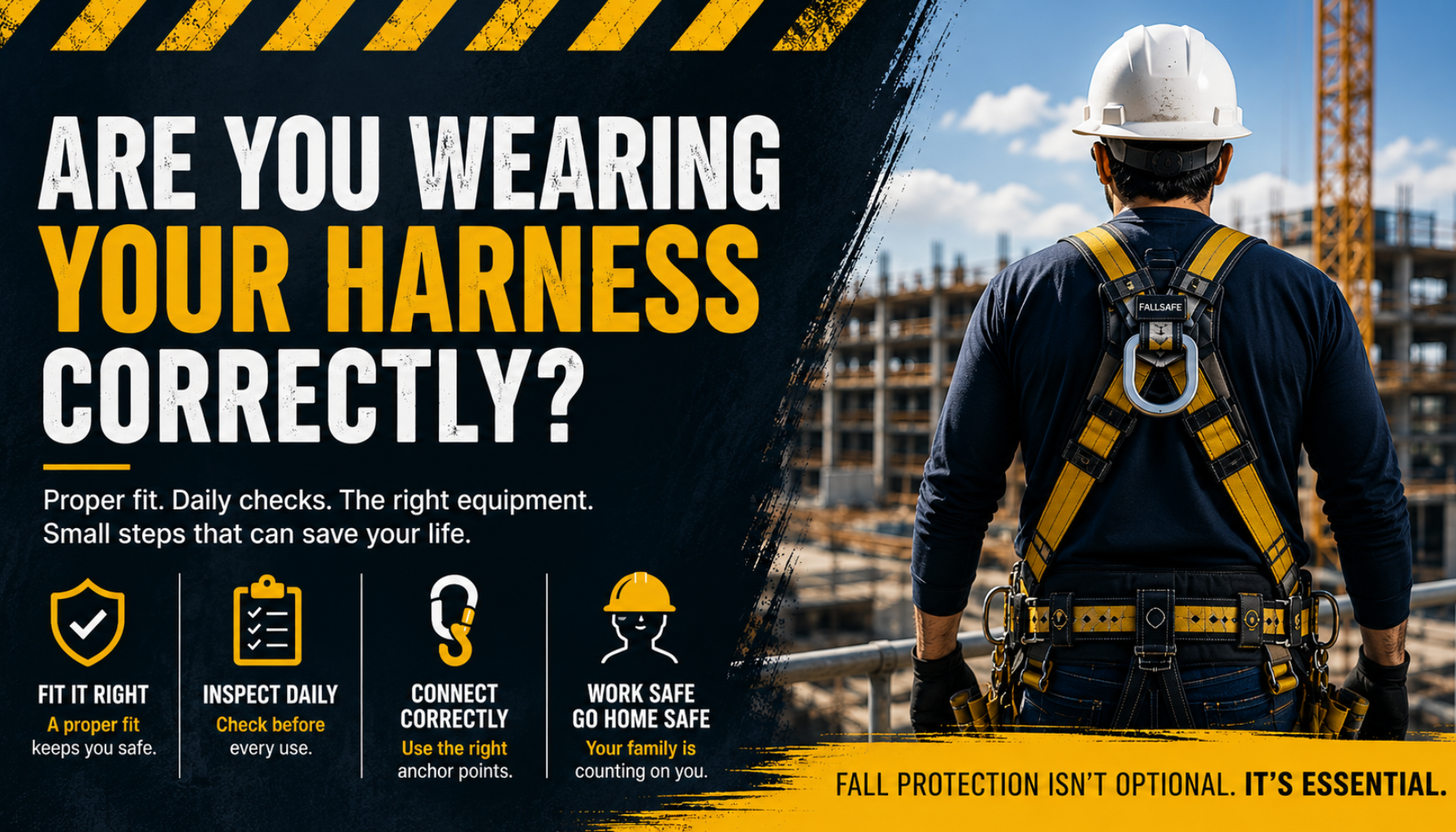
Are You Wearing Your Harness Correctly?
A full-body harness is one of the most important pieces of fall protection equipment on a construction site, but it only works the way it should when it fits right, is inspected often, and is used for the right task.
Why Harness Fit Matters
Working at heights is common in construction. Roofers, steel workers, scaffold crews, maintenance teams, and equipment installers all face fall hazards on a regular basis. A full-body harness is designed to help protect a worker if a fall happens by spreading the arresting force across stronger parts of the body.
Fit plays a bigger role than most people realize. A loose harness can move around too much if a fall happens, while one that feels overly tight can make it uncomfortable to work in all day. Taking a few extra minutes to adjust the straps correctly can make the harness safer and easier to wear on the job.
Jobsite reminder: Wearing a harness is not enough. Workers need to wear it correctly, connect it properly, and inspect it before each use.
What Workers Should Check Before Starting
Before getting on a roof, scaffold, or aerial lift, workers should give their harness a quick inspection. Things like worn stitching, cracked buckles, or damaged webbing are easy to overlook when the day gets busy, but spotting those issues early can help prevent bigger problems later.
- Look for cuts, frays, burns, or worn webbing
- Check stitching for broken or pulled threads
- Inspect buckles and D-rings for cracks or damage
- Make sure labels and tags are readable
- Confirm the chest strap sits across the chest
- Keep the back D-ring centered between the shoulder blades
- Adjust leg straps so they are snug but comfortable
- Remove questionable equipment from service
Choose the Right Harness for the Work
Not every harness is made for the same type of work. A standard fall protection harness may work fine for general construction, but certain jobs need additional features depending on the environment and the kind of movement involved.
For example, welding and hot work may require harnesses made with flame-resistant materials. Climbing work may need front attachment points or added support. Positioning work may require side D-rings so a worker can stay supported while keeping both hands free.
Using the wrong harness can make the job more difficult and may even create extra safety concerns. It is always important to choose equipment that matches the task, the work area, and the fall protection system being used on site.
Comfort Helps Compliance
A harness that fits well and feels comfortable is more likely to be worn the right way all day. Padding, breathable materials, quick-connect buckles, and proper sizing can make a big difference, especially during long shifts in tough jobsite conditions.
Common Harness Mistakes on the Job
Even experienced crews can pick up bad habits over time. Loose straps, twisted webbing, damaged hardware, and skipped inspections are all things that can increase the risk of an accident. Another common issue is using the same harness setup for every task without checking if it is actually the right equipment for the job.
Supervisors and crew leads should make harness checks part of the daily routine. When workers see safety treated as part of the job instead of an afterthought, they are more likely to follow the right steps every time.
Small Checks Can Prevent Serious Injuries
Falls continue to be one of the leading causes of serious injuries in construction. A harness can help protect workers, but only if it is worn and inspected properly. Taking a little extra time to check straps, hardware, and tie-off points before starting work can go a long way toward keeping crews safe.
Before the next lift, climb, or rooftop task, ask the crew this week’s question: are you wearing your harness correctly?