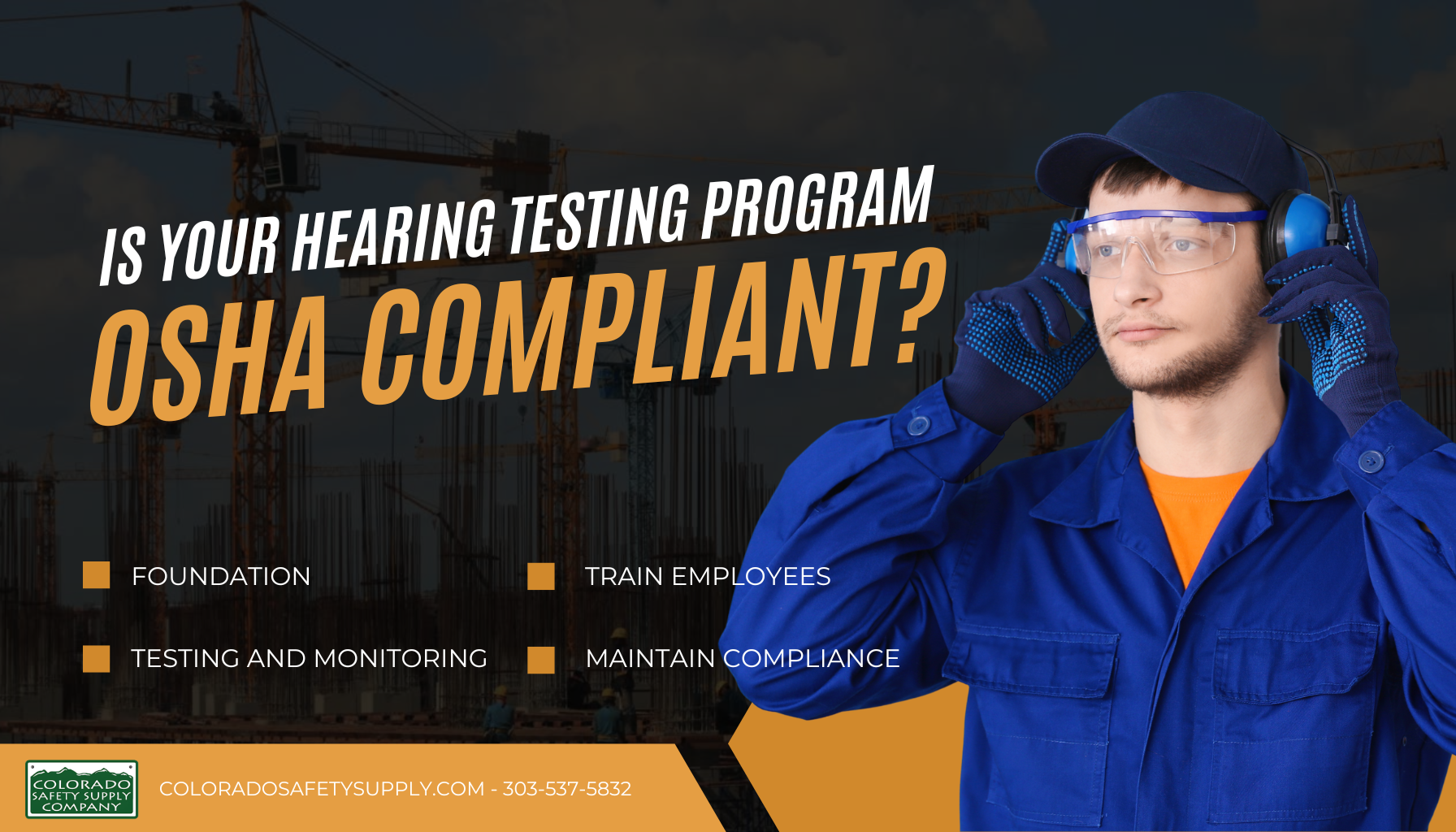
OSHA’s Hearing Conservation Standard (29 CFR 1910.95) requires employers to implement a program when workers are exposed to 8-hour time-weighted average noise levels of 85 dBA or higher. In theory, the requirement is straightforward, but in practice many employers miss key elements.
1. Lack of Baseline and Annual Audiograms
Workers must receive a baseline test within six months of exposure and annual audiograms every year. Missed tests, expired tests, or missing documentation are immediate red flags for OSHA.
2. Failure to Conduct Proper Noise Exposure Monitoring
Many companies assume noise levels rather than measuring them. OSHA requires periodic monitoring and updated assessments whenever production, equipment, or PPE changes.
3. No Follow-Up on Standard Threshold Shifts (STS)
If an employee shows early signs of hearing loss, employers must take specific steps, including retesting, training, and evaluating PPE. This is one of the most commonly overlooked requirements.
4. Inconsistent Training and Documentation
OSHA requires annual training that covers risks, proper PPE use, and the purpose of audiometric testing. If it is not documented, OSHA considers it not done.
What Happens During an OSHA Audit?
If OSHA initiates an inspection, whether due to a complaint, injury, referral, or random visit, they typically ask immediately for:
-
Noise exposure monitoring records
-
Audiometric testing records for all exposed employees
-
Training documentation and proof of follow-up on STS cases
Missing any of these can result in:
-
Costly citations that often exceed fifteen thousand dollars per violation
-
Repeat violations with significantly higher penalties
-
Increased workers’ compensation claims
-
Operational shutdowns during the investigation
Beyond fines, auditors often discover patterns of unaddressed hearing loss, an expensive liability that can follow a company for years.
Why Hearing Conservation Matters More Than Ever
Hearing loss does not happen overnight. It appears slowly, quietly, and permanently. Workers may not notice symptoms until the damage is irreversible.
A strong hearing conservation program:
-
Protects employees from lifelong injury
-
Reduces workplace fatigue and communication errors
-
Improves safety on the jobsite
-
Prevents costly claims and violations
-
Shows a company’s commitment to worker well-being
When companies take hearing testing seriously, the results are immediate. Teams work safer, compliance improves, and audits bring fewer surprises.
How to Strengthen Your Program Today
If you are unsure whether your program would pass an OSHA compliance audit, begin with the following:
-
Measure actual noise levels
Noise varies by shift, equipment, and task. Accurate monitoring is the foundation of your program. -
Establish or update baseline audiograms
Every exposed worker must have a baseline, and annual tests should be reviewed for STS trends. -
Improve training and PPE compliance
Training should be consistent and documented. Workers need to understand why hearing protection matters, not only how to wear it. -
Review your documentation
If OSHA cannot see it, it did not happen. Organize files by date, employee, and department. -
Consider on-site or mobile hearing testing services
These options reduce scheduling delays, increase participation, and streamline compliance efforts.
Final thought
Ask yourself this. If OSHA showed up today, would your hearing testing program hold up? If the answer is anything less than confident, this is a good moment to tighten a few things. A strong hearing conservation program protects your team and keeps your company moving forward without unnecessary setbacks.