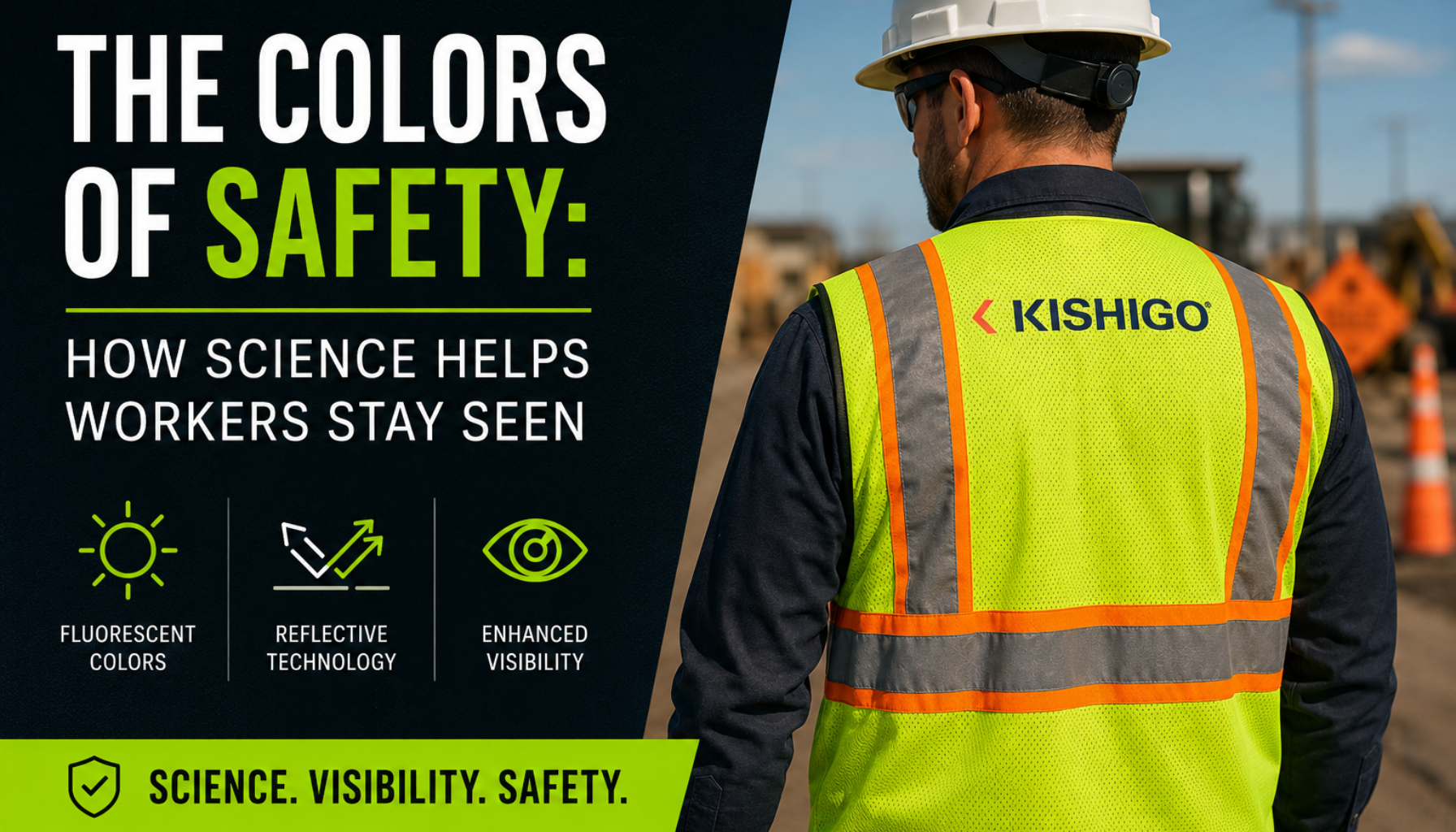
Walk onto any construction site, roadway project, warehouse, or industrial facility, and you'll immediately notice workers wearing bright yellow-green or orange safety apparel. While these colors are impossible to miss, they're not chosen by accident.
The colors used in high-visibility safety gear are backed by decades of research into human vision, color perception, and workplace safety. Every fluorescent vest, reflective jacket, and safety shirt is designed with one primary goal: helping workers be seen quickly and clearly in potentially hazardous environments.
Understanding the science behind these colors reveals why high-visibility apparel remains one of the most effective tools for preventing workplace accidents.
Why Certain Colors Capture Our Attention
The human eye is remarkably complex, but it doesn't perceive all colors equally.
Research has shown that our eyes are especially sensitive to wavelengths within the yellow-green portion of the visible light spectrum. As a result, fluorescent yellow-green appears brighter and more noticeable than many other colors, even when viewed from the same distance.
This heightened visibility allows workers to stand out more effectively against the backgrounds commonly found on jobsites, such as concrete, asphalt, soil, steel, and heavy equipment. The easier it is for the eye to distinguish a worker from their surroundings, the faster the brain can recognize their presence.
In environments where operators, drivers, and workers are constantly processing information, those extra moments of recognition can make a significant difference.
The Science Behind Fluorescent Colors
One of the reasons high-visibility apparel appears so bright during daylight hours is because of fluorescence.
Unlike standard fabrics that simply reflect sunlight, fluorescent materials absorb ultraviolet (UV) light from the sun and convert it into visible light. This process makes the fabric appear brighter than ordinary colors and increases its visibility in a wide range of lighting conditions.
That's why fluorescent safety apparel often appears to glow during daylight hours, especially during early mornings, late afternoons, or cloudy weather when visibility may already be reduced.
This enhanced brightness helps workers remain noticeable from greater distances, providing drivers and equipment operators with more time to react.
Why Only Certain Colors Are Used in Safety Apparel
If you've ever wondered why high-visibility garments typically come in fluorescent yellow-green or fluorescent orange, there's a scientific reason.
Not every bright color performs equally in workplace environments. Safety colors are selected because they provide exceptional visibility and contrast across a variety of settings and weather conditions.
Industry standards establish strict requirements for high-visibility apparel, ensuring approved colors meet specific performance criteria. These standards help guarantee that workers remain highly visible whether they're directing traffic, working around machinery, or operating near moving vehicles.
The focus isn't on style or appearance—it's on maximizing visibility where it matters most.
Contrast: The Secret to Being Seen
Brightness alone doesn't guarantee visibility.
What often makes an object stand out is contrast—the difference between the object and its background.
For example, fluorescent orange provides excellent contrast against green vegetation and natural landscapes, making it a popular choice for roadside and outdoor work. Fluorescent yellow-green creates strong contrast against urban environments filled with gray roads, buildings, and equipment.
The greater the contrast between a worker and their surroundings, the easier it becomes for others to identify them quickly and accurately.
This is especially important in busy work environments where visual distractions are everywhere.
Why Visibility Changes After Dark
During the day, fluorescent colors do most of the work. At night, however, the science of visibility shifts.
Without sunlight, fluorescent materials lose much of their effectiveness because there is little UV light available to activate them. That's why reflective technology becomes critical during low-light conditions.
Reflective materials are engineered using microscopic glass beads or advanced prism structures that redirect light back toward its source. When headlights or work lights strike reflective tape, the light is returned directly to the viewer, causing the material to appear dramatically brighter than surrounding objects.
This technology helps workers remain visible during nighttime operations, roadside work, and other low-light environments where color alone isn't enough.
The Human Brain Recognizes Movement
Visibility isn't just about seeing a bright object—it's also about recognizing a person.
The human brain is highly skilled at identifying movement patterns. Researchers have found that people can quickly recognize the motion of another person, even when visibility is limited.
This understanding influences the design of modern high-visibility apparel. Reflective striping is often placed around the torso, shoulders, arms, and legs to highlight natural body movement. As workers walk, bend, or move, the reflective elements create recognizable motion patterns that help others instantly identify them as people rather than stationary objects.
This rapid recognition can provide valuable reaction time for drivers and equipment operators.
Environmental Conditions Matter
Even the most visible colors can be affected by the environment.
Rain, fog, dust, snow, shadows, and glare can all reduce visibility. Changing weather conditions often make it harder for workers to be seen, which is why safety apparel is designed to perform under a wide variety of circumstances.
By combining fluorescent colors with reflective materials, high-visibility garments help maintain worker visibility across changing conditions throughout the day and night.
This layered approach ensures protection doesn't disappear when the weather changes.
Why Quality Safety Apparel Makes a Difference
Not all high-visibility garments perform the same over time.
Exposure to sunlight, dirt, moisture, and repeated laundering can gradually reduce the effectiveness of both fluorescent fabrics and reflective materials. A garment may still appear usable while no longer delivering the level of visibility it was designed to provide.
That's why regular inspections and timely replacement of worn safety apparel are essential parts of any workplace safety program.
Investing in quality high-visibility gear helps ensure workers remain visible throughout the garment's service life.
Science Designed to Protect Workers
The bright colors seen on jobsites every day are the result of extensive research into vision science, material technology, and workplace safety. Every fluorescent fabric, reflective strip, and design feature serves a specific purpose: helping workers get noticed faster.
High-visibility apparel is far more than a compliance requirement. It's a scientifically engineered safety solution that helps improve recognition, increase reaction time, and reduce the likelihood of workplace accidents.
When workers can be seen sooner, everyone has more time to respond. And in many situations, that extra time can make all the difference.
Shop High-Visibility Safety Vests
Whether you're outfitting a construction crew, roadway workers, warehouse employees, or utility teams, choosing the right high-visibility vest is an important step toward improving workplace safety. Colorado Safety Supply offers a wide selection of ANSI-compliant high-visibility safety vests designed to help workers stay seen in a variety of environments and conditions.
Browse our collection of high-visibility safety vests and find the right fit for your team:
https://coloradosafetysupply.com/collections/high-visibility-safety-vest