Head protection guide
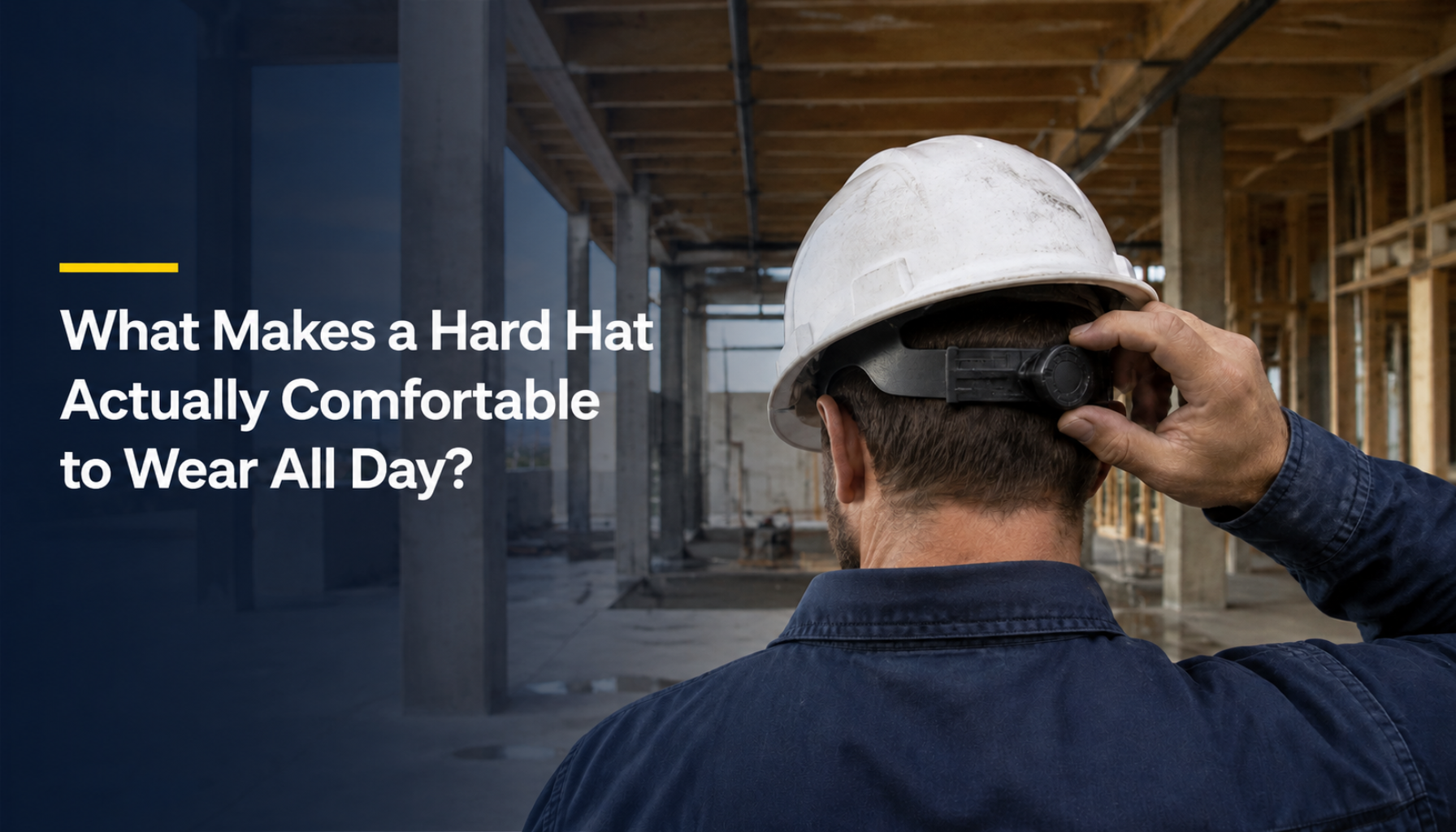
What Makes a Hard Hat Actually Comfortable to Wear All Day?
A hard hat can meet the right standard and still be the wrong hat for the person wearing it. Here is what makes the difference over an eight-, ten-, or twelve-hour shift.
You usually know within the first hour when a hard hat is not working. The front edge creeps down. The ratchet digs into the back of your head. Sweat collects under the band, so you loosen it, then tighten it again every time you bend over.
That is more than an annoyance. Head protection has to stay on, stay properly positioned, and match the hazards of the job. If a worker spends the day adjusting it or quietly takes it off whenever the supervisor is out of sight, the setup has failed in a very practical way.
Comfort starts with fit, not padding
Extra padding sounds like the obvious answer, but fit does most of the work. A comfortable hard hat sits level and stable, with enough clearance between the shell and the head for the suspension to do its job. It should feel snug without pinching the forehead, temples, or the area behind the ears.
The adjustment range matters, but head shape matters too. Two helmets marked for the same head-size range can feel completely different. One may create a hot spot at the forehead; another may shift side to side. This is why a brief wear trial tells you more than a spec sheet alone.
When fitting a crew, do not test the sample on one person and order fifty. Let several workers wear the options with the other PPE they actually use. A good fit should remain stable when the wearer looks up, looks down, and bends at the waist.
Six details workers notice by lunchtime
- 1 A suspension that spreads pressure Four-, six-, and eight-point suspensions attach to the shell in different ways, but more points do not automatically guarantee a better fit. Look for a suspension that distributes pressure evenly and does not concentrate the load in one or two spots.
- 2 A ratchet you can reach with gloves on The adjustment should turn smoothly and hold its setting. Workers should be able to make a small adjustment without removing the helmet, especially when changing layers as the temperature shifts.
- 3 Balanced weight A few ounces matter, but the number on the scale is only part of the story. A slightly heavier helmet that sits close and balanced may feel better than a lighter one that pulls forward. Face shields, earmuffs, lamps, and other accessories can change that balance.
- 4 Heat and moisture management A washable, replaceable sweatband is a small feature with a big effect on a long shift. Vents can improve airflow where allowed. On electrical work, however, vented head protection may not provide the protection the hazard requires. Start with the hazard assessment, then compare comfort features within the correct type and class.
- 5 A shell profile that suits the work Full-brim hard hats offer additional coverage from sun, rain, and falling debris. Cap-style models can feel less bulky in tight spaces. Safety helmets with chin straps are designed to stay on more securely during climbing, work at height, awkward positions, or a slip and fall.
- 6 Accessories designed for that model Improvised add-ons can interfere with fit or protection. Use manufacturer-approved chin straps, liners, eye protection, hearing protection, and face shields. Compatibility matters: the best helmet becomes uncomfortable fast when earmuffs press the suspension into the wearer’s head.
Hard hat or safety helmet?
For many jobs, a traditional hard hat remains a practical choice. Safety helmets are increasingly common where side-impact protection, a chin strap, or integrated accessories make sense. The choice should follow the job hazard analysis, not a blanket rule that one style is always better.
| Work condition | Comfort feature to prioritize | Safety check |
|---|---|---|
| General construction and ground work | Balanced shell, adjustable suspension, replaceable sweatband | Confirm the required impact type and electrical class |
| Work at height or frequent bending | Secure fit and a comfortable, adjustable chin strap | Use a helmet and strap approved together by the manufacturer |
| Hot, exposed work | Moisture-wicking components, lighter colors, allowed ventilation | Do not choose vents when the electrical hazard requires non-vented protection |
| Electrical work | Low-pressure suspension and sweat management within the correct class | Verify the Class G or Class E marking required by the assessment |
| Face shield or earmuff use | Integrated, balanced accessory mounting | Use only compatible accessories listed by the manufacturer |
OSHA recognizes two impact types: Type I protects against blows to the top of the head, while Type II also addresses impacts to the sides. Electrical classes are separate: Class G and Class E provide tested levels of electrical protection; Class C does not. Comfort comes after choosing the protection appropriate to the hazard—not instead of it.
Comfort on a Colorado jobsite
Along the Front Range, a shift can begin with a cool morning and turn hot under direct sun by lunch. That temperature swing makes easy adjustment and moisture control especially useful. A worker may need room for a manufacturer-approved cold-weather liner at the start of the day, then a quick ratchet adjustment after removing it later.
For sunny outdoor work, a full brim or a compatible neck shade can add coverage. Lighter shell colors may also be worth considering for exposed crews. None of these features replaces the basics of heat-stress prevention: water, acclimatization, rest, shade or cooling, and a work plan suited to the conditions.
Run a ten-minute wear test before a large order
A catalog can narrow the options. A short, structured trial can settle the decision. Fit each worker according to the manufacturer’s directions, attach the accessories used on the job, and have the worker move naturally rather than stand still in front of a mirror.
Quick wear-test checklist
- The helmet sits level and does not block the worker’s view.
- The suspension feels snug, with no sharp pressure at the forehead or temples.
- The helmet stays in position while looking up, crouching, and bending over.
- The ratchet can be adjusted easily with the gloves used on site.
- Eye and hearing protection fit without forcing the helmet out of position.
- A chin strap, when used, stays secure without rubbing or restricting normal movement.
Ask one useful question at the end: “Where do you feel the helmet?” Ideally, the answer is “nowhere in particular.” A distinct pressure point rarely improves after a full day.
Keep a comfortable helmet comfortable
Sweat, dust, sunscreen, and daily handling take a toll on the suspension and sweatband. Inspect the shell, suspension, chin strap, cushioning, labels, and accessories before use. Clean the equipment according to the manufacturer’s instructions—typically with mild soap and water—and let it air-dry.
Do not treat the back window of a truck as helmet storage. Direct sun and extreme temperatures can damage materials over time. Retire head protection after an impact or when inspection shows damage or degradation, even if the outside still looks acceptable. Replacement timing should follow the manufacturer’s guidance and the actual conditions of use.
Common questions
Should a hard hat feel tight?
It should feel snug enough to remain stable, but not tight enough to create pressure points or a headache. Adjust the suspension rather than relying on extra layers or improvised padding.
Can I wear a ball cap or beanie underneath it?
Do not put ordinary caps, hoodies, or bulky beanies under head protection. They can change the fit and interfere with the suspension. For cold work, choose a liner specifically designed and approved for use with that hard hat or helmet.
Are vented hard hats always more comfortable?
They can improve airflow in hot conditions, but they are not appropriate for every hazard. OSHA specifically notes that vented hard hats or safety helmets cannot be used for electrical work. Confirm the required electrical class before choosing ventilation.
Does a lighter helmet always feel better?
No. Weight matters, but balance and pressure distribution matter just as much. Compare complete setups, including the face shield, earmuffs, lamp, or other approved accessories the worker will use.
When should a hard hat be replaced?
Replace it after an impact, when the shell or suspension shows damage or deterioration, or when the manufacturer’s service-life guidance calls for retirement. Exposure, storage, handling, and use all affect service life, so there is no single replacement date that fits every helmet.
Fit the job. Then fit the worker.
Colorado Safety Supply carries hard hats, safety helmets, replacement comfort components, and cooling accessories for crews across Denver and beyond. If you are outfitting a team, we can help you compare options against the work, the hazards, and the people who will wear them.