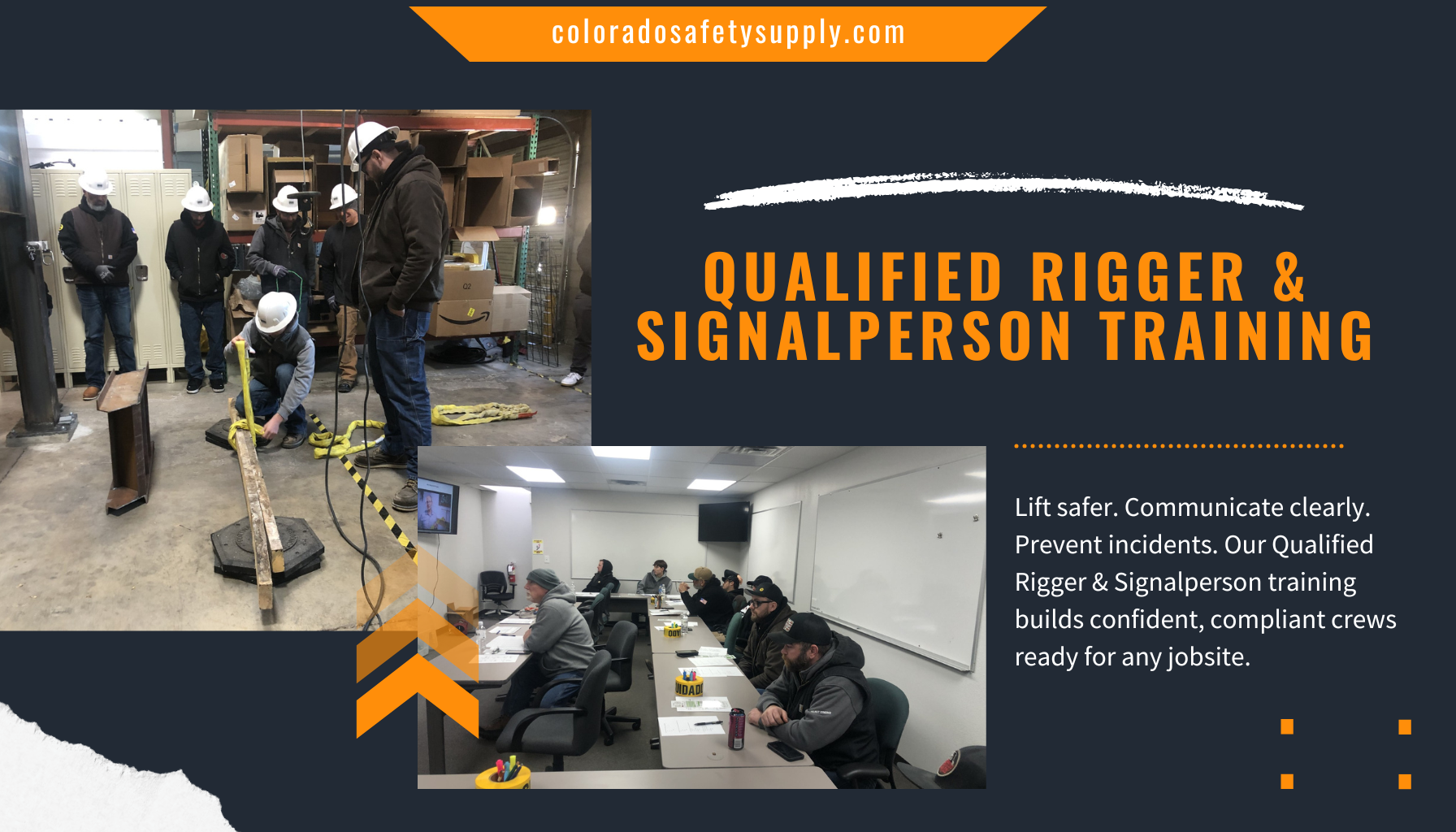
When a load is suspended, there is no “undo” button. Rigging and signaling are some of the highest-risk activities on a jobsite. Heavy loads, moving equipment, limited visibility, and split-second communication all increase the potential for serious incidents.
That is why more companies invest in Qualified Rigger and Qualified Signalperson training. Not just to meet requirements, but to reduce incidents, protect workers, and keep projects moving.
1) To prevent serious injuries and costly incidents
A dropped load, a side-loaded hook, a failed sling, or a miscommunicated signal can quickly turn into a catastrophic event. Training helps workers recognize hazards early and make better decisions before and during a lift.
Training focuses on:
• Proper sling selection and load ratings
• Hitch configurations and load control
• Center of gravity awareness
• Load path planning and safe zones
• Communication protocols and hand signals
• Knowing when to stop the lift
2) To improve communication between the crane operator and crew
Signalpersons act as the eyes and ears of the crane operator when visibility is limited. Even experienced operators rely on clear, consistent signals from trained professionals.
Training helps signalpersons learn:
• Standard hand signals and radio communication
• Clear and consistent commands
• Managing distractions and noisy environments
• Maintaining safe positioning during the lift
Clear communication leads to fewer delays, fewer near misses, and smoother lifts.
3) To meet jobsite requirements and reduce liability
Many general contractors, industrial sites, and energy jobs require documented rigging and signalperson training before workers can operate around cranes. Experience alone is often not enough, and proof of training is commonly required.
Qualified training supports:
• Employer qualification requirements
• Contractor pre-qualification packages
• Audit readiness for safety and compliance
• Consistency across multiple crews and job sites
4) To protect equipment and reduce downtime
Rigging mistakes do not just injure people. They damage equipment, destroy materials, and delay schedules. One incident can shut a site down while investigations take place.
Training helps prevent:
• Sling overload and premature wear
• Shock loading
• Incorrect connection points
• Improper use of shackles, hooks, and hardware
• Uncontrolled load movement
When crews rig correctly, equipment lasts longer and projects stay on schedule.
5) To build confidence and leadership in the field
Rigging and signaling require more than physical effort. These roles demand planning, judgment, and the confidence to speak up when something is not safe.
Qualified training helps workers:
• Understand why certain practices matter
• Recognize when a lift plan needs to change
• Communicate concerns clearly
• Lead safer lift operations on site
This training often helps develop strong field leaders quickly.
6) To support advancement and better career opportunities
Workers trained as riggers and signalpersons are often more valuable to a crew. They may be trusted with higher-risk tasks, step into lead roles, or qualify for additional credentials.
For individuals, this can mean:
• More consistent work opportunities
• Higher responsibility roles
• A stronger resume for industrial and crane-supported projects
Who should consider Qualified Rigger / Signalperson training?
This training is especially valuable for:
• Ironworkers, millwrights, and welders
• Oil and gas or energy crews
• Construction and industrial maintenance teams
• Anyone working around cranes, hoists, or suspended loads
• Foremen, competent persons, and safety leads supporting lift operations
Why it matters
People take Qualified Rigger and Signalperson training because it helps teams lift safer, communicate better, avoid incidents, and meet jobsite requirements. It’s an investment that pays off in fewer delays, fewer injuries, and a more confident crew.