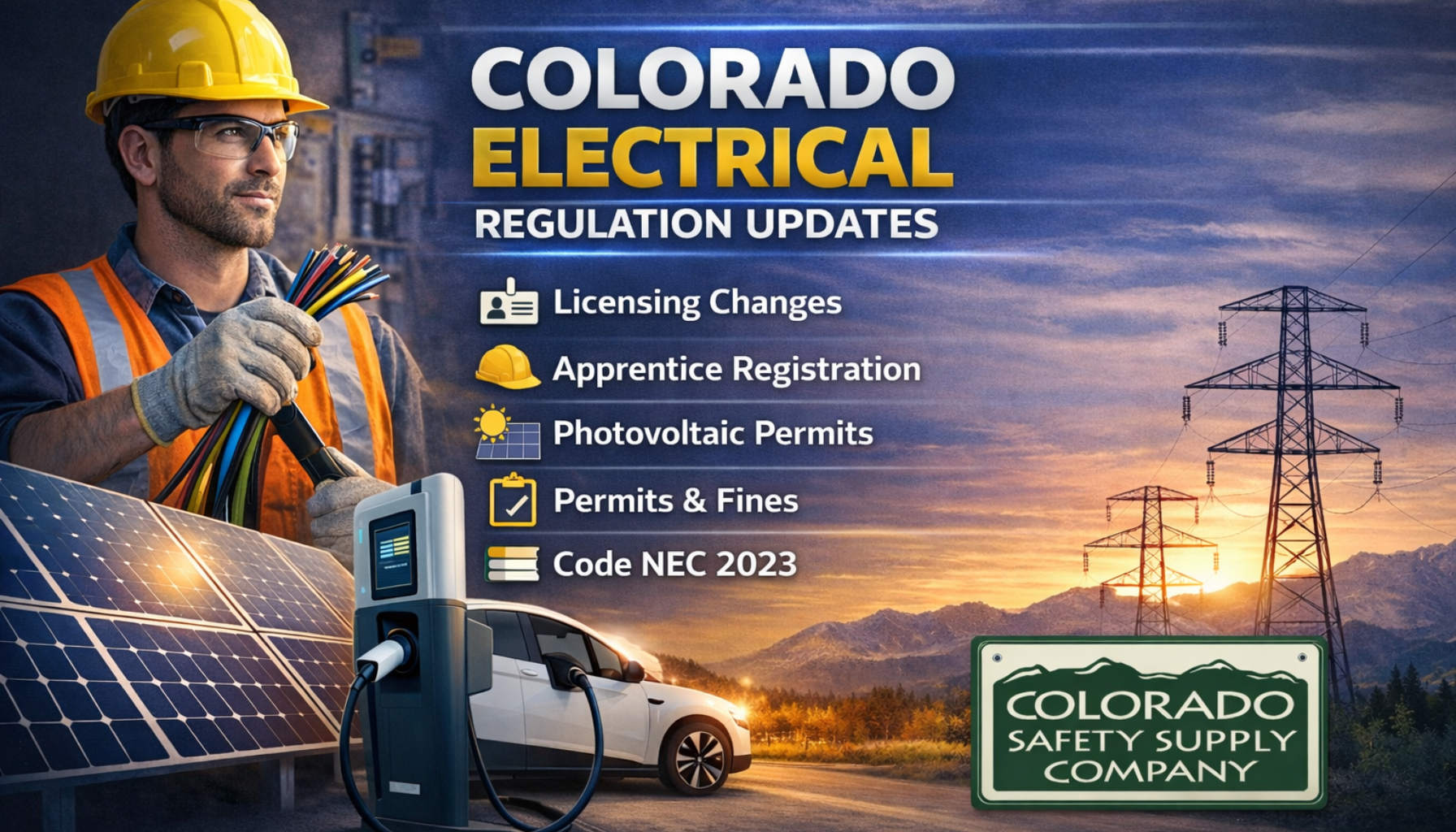
On January 28, 2026, the Colorado State Electrical Board under the Colorado Department of Regulatory Agencies adopted revisions to several key rules in 3 CCR 710-1. The updates were registered February 9, 2026 and include changes to definitions, licensing, training, permits, enforcement, and renewals. Here are the highlights that matter most to contractors, electricians, and photovoltaic installers.
National Electrical Code Still Front and Center
Colorado continues to enforce the 2023 edition of the National Fire Protection Association standard known as NFPA 70, the National Electrical Code. This remains the minimum standard for planning and installing electrical systems in the state.
For anyone involved in EV infrastructure, there is also a reminder that multifamily projects must comply with Colorado Energy Office requirements tied to the Model Electric Ready and Solar Ready Code as adopted in June 2023.
Apprentice Registration and Recordkeeping Tightened
The Board is reinforcing documentation requirements:
-
Employers must register apprentices within 30 days of hire.
-
Apprentices must be removed from company registration within 30 days of termination.
-
Contractors must maintain detailed records of hours worked, broken down by residential and commercial or industrial experience.
-
Experience verification forms must be provided within 30 days of an employee leaving.
Failure to follow these steps can lead to disciplinary action and fines.
Experience Hours Clearly Defined
The Board clarified how experience is calculated for licensing exams:
-
Residential Wireman: 4,000 hours in no less than two years
-
Journeyman Electrician: 8,000 hours in no less than four years
-
Master Electrician: 10,000 hours in no less than five years
Applicants cannot verify their own experience. Documentation must include exact dates, hour breakdowns, and proper signatures.
For photovoltaic work, only certain DC side tasks count toward experience. AC side connections to panels must be performed under proper contractor registration. Two hours of qualifying PV work equals one hour toward electrical experience, up to 2,000 hours.
288-Hour Training Requirement for Journeyman Applicants
Journeyman applicants must complete 288 hours of structured electrical training during the last eight years of apprenticeship. This training must include:
-
Grounding and bonding
-
NEC changes
-
Wiring methods
-
Theory and calculations
-
OSHA-based safety training
Trade shows, board meetings, and pro bono service do not qualify. The Board will not pre-approve courses, so documentation and proper course structure are critical.
Permits and Inspections: No Shortcuts
The Board made it clear that:
-
Permits must be pulled by the contractor or qualified homeowner performing the work.
-
Contractors cannot work under another company’s permit.
-
Work started before a permit is issued may be subject to double fees.
-
Stop work orders must be followed immediately.
-
Reinspection fees can be assessed if a site is not ready, inaccessible, or unsafe.
Photovoltaic permits must be issued in the name of the registered photovoltaic installer performing the work.
Enforcement and Fines
The fine schedule remains significant. Examples include:
-
Unlicensed journeyman activity starting at $225
-
Acting as an electrical contractor without registration starting at $750
-
Failure to obtain a permit starting at $375
Repeat offenses can reach up to $2,000 per day. Paying a fine does not remove the obligation to correct the violation.
Renewal and Continuing Education
Licenses and registrations renew every three years to align with the NEC cycle.
Active licensees must complete 24 hours of continuing education per renewal period, including:
-
At least 4 hours on NEC changes
-
Core topics such as grounding and bonding, wiring methods, theory, and safety
No more than 4 hours can be credited for safety training. Online courses must be interactive and from approved Attesting Providers.
If a license expires more than 60 days, reinstatement requires continuing education. If expired more than two years, the applicant may need to retest or demonstrate competency through other approved means.
Why This Matters
For contractors and electrical professionals, these updates are less about new rules and more about accountability. The Board is emphasizing documentation, proper supervision, structured training, and compliance with permit and inspection requirements.
If you run a shop, manage apprentices, or handle photovoltaic installations, now is a good time to review your internal processes. Clean paperwork, accurate hour tracking, and up-to-date training records will protect your business and keep projects moving without interruption.