Every day, workers step onto job sites assuming they will make it home.
But what if something as simple as being seen could be the difference between life and death?
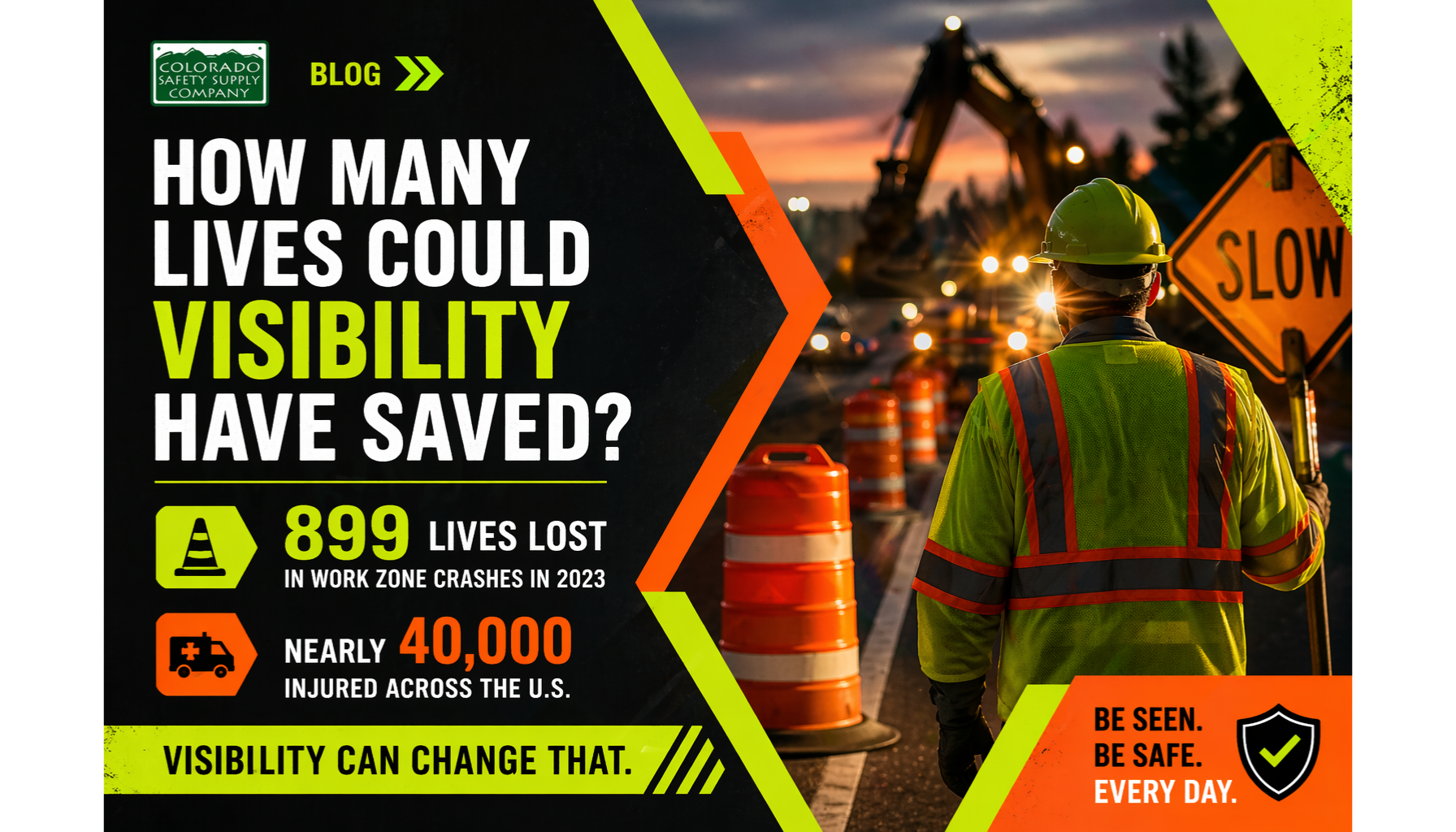
In 2023, 899 people were killed and nearly 40,000 were injured in work zone crashes across the U.S. Those numbers are not just statistics. They represent real people, real families, and real moments that could have ended differently.
Many of these incidents involve workers being struck by vehicles or equipment. Events that are often preventable with better awareness and visibility practices.
So here is the real question.
Are we doing enough to be seen or are we just hoping for the best?
The Hidden Risk No One Talks About Enough
On busy job sites, visibility is not just about wearing bright colors. It is about:
- Being noticeable in low light
- Standing out in complex environments
- Giving operators enough time to react
The problem is that risk does not always look obvious. A worker may feel visible enough, but from a distance or from inside heavy equipment, they can blend into the background.
That gap between feeling safe and actually being seen is where incidents happen.
A Simple Way to Look at It
Here is the visual representation:

This visual makes it clear.
- Low visibility leads to high risk
- Medium visibility reduces risk but does not eliminate it
- High visibility significantly lowers the chance of an incident
As visibility increases, risk drops. Most job sites operate somewhere in the middle, not fully optimized.
Why This Still Happens
If the solution seems simple, why are incidents still happening?
- Complacency. It has not happened here before
- Inconsistent gear use. Not everyone wears high visibility PPE correctly
- Changing conditions. Weather, lighting, and job phases shift constantly
- Lack of awareness. Workers underestimate how hard they are to see
Routine plays a big role. The same habits repeat until something goes wrong.
What Could Change the Outcome
Improving visibility is not about one big fix. It is about stacking small advantages:
- High visibility apparel that contrasts with the environment
- Reflective elements that work in low light, not just daylight
- Better job site planning such as lighting and traffic flow
- Reinforcing visibility as a daily safety habit
Equipment operators cannot avoid what they cannot clearly see.
So What Is the Real Answer
Back to the question.
How many lives could visibility have saved?
We may never know the exact number.
But we do know this.
Every time visibility improves, risk goes down.
Every time risk goes down, lives are protected.
Safety is not always about complex systems or expensive solutions.
Sometimes it comes down to something simple and powerful.
Being seen.
So here is a better question to take into your next workday.
Would I be easy to spot or easy to miss?