What Colorado Safety Supply Company Wants Crews To Know
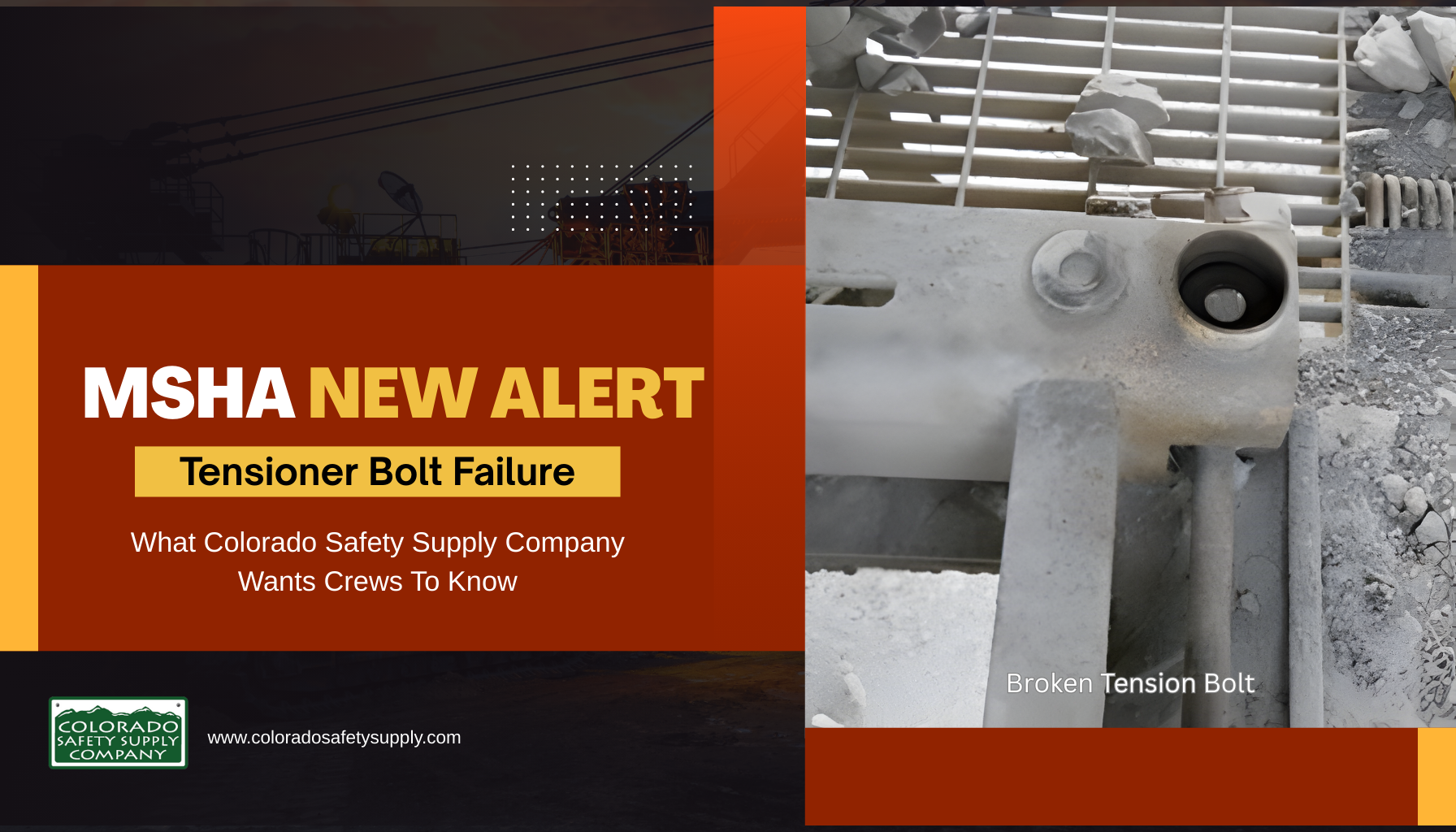
Keeping workers safe starts with knowing the risks that are easy to overlook. MSHA recently released a safety alert focused on tensioner bolt failures, and it is something every crew leader, safety manager, and equipment operator should pay attention to. A single bolt may look insignificant, but when it is holding heavy equipment under tension, failure can happen in an instant.
Tensioner bolts are commonly used on conveyors, hoists, winches, and many other pieces of mining and industrial equipment. Over time, vibration and constant load can weaken them. The concerning part is that small cracks or loosening often happen quietly. By the time a bolt gives out, there is no warning. MSHA’s reminder is clear. Inspections must be consistent and detailed, not rushed or skipped.
At Colorado Safety Supply Company we know that a strong safety program is built on the combination of reliable PPE, trained workers, and well maintained equipment. PPE protects workers, but it cannot stop the damage caused by a mechanical failure. This alert reinforces the need for disciplined maintenance to work hand in hand with personal protection.
Here are a few smart steps that can reduce this risk right away:
• Place bolt checks and torque inspections into your regular maintenance schedule
• Record the condition and replacement dates for all tensioner bolts
• Train workers to treat bolts and fasteners as critical safety components
• Select equipment designed to tolerate heavy load and long term vibration
• Strengthen mechanical maintenance programs alongside PPE and training efforts
A tensioner bolt may be small, but the responsibility it carries is not. MSHA’s alert is a timely reminder that the safest crews are the ones who pay attention to both the obvious hazards and the hidden ones.